Reference · Flowchart symbols
Flowchart decision symbol: what the diamond is used for
In short
The diamond is the flowchart decision symbol. It holds a question or a condition, such as "Is the total at least $50?", and the flow leaves it along exactly one of its labelled exits. Most decisions have two branches (Yes/No or True/False), and one arrow enters from above. A diamond may have three or more branches when the question has several possible answers, but every exit must carry a label.
Updated · by the ChartCraft team · part of the flowchart symbols reference
What is the decision symbol (diamond) used for in a flowchart?
The decision symbol marks the point where the process branches depending on a condition. It is the only standard symbol that produces more than one outgoing path, so it is where all the logic of a flowchart lives: approvals, validations, comparisons, and loop tests. ISO 5807 calls it the decision symbol.
| Symbol | Name | What goes inside | Exits |
|---|---|---|---|
| Decision (diamond) | A question or condition: "Stock available?", "x > 10?" | Two or more, each labelled | |
| Flow line from the decision | Label on the arrow: Yes, No, or the answer value | One arrow per answer | |
| Process after a branch | The action taken on that branch | One arrow out | |
| Preparation (not a decision) | Loop setup such as "i = 1 to 10" | One arrow in, one out |
What flowchart shape is used for a decision?
A diamond (a rhombus standing on one corner). Every flowchart tool uses it, and in Mermaid it is written with curly braces: D{Is it raining?}. Other notations use the same idea with a different shape: BPMN has a diamond gateway with a marker inside, and UML activity diagrams use a diamond decision node.
How many branches does a decision box have in a flowchart?
Usually two, and at least two. A yes/no question gives two exits; a question with several answers (a grade, a status, a menu choice) can give three or more. There is no fixed maximum, but more than four or five exits is a sign that the decision should be split into two diamonds or turned into a table.
| Decision type | Exits | Labels | Example |
|---|---|---|---|
| Binary | 2 | Yes / No, True / False | Password correct? |
| Multi-way | 3 or more | One label per possible answer | Grade: A, B, C, fail |
| Range test | 2 or 3 | <, =, > or ranges | Compare balance to price |
| Chained | 2 per diamond | Yes / No at each step | Nested if-else |
How do you label the branches of a decision symbol?
Write the question inside the diamond so that it can be answered with a short value, and write that value on each outgoing arrow. Do not put labels inside the diamond's corners and do not leave an exit unlabelled.
- Phrase it as a question. "Age 18 or over?" beats "Age check".
- Cover every answer. If the labels are Yes and No, both arrows must exist. A missing No branch is the most common decision error.
- Be consistent. Put Yes on the same side (usually down or right) in every diamond of a chart.
- One entry arrow. Merge incoming paths before the diamond, not into it.
- Test one thing. "Paid and shipped?" is two decisions.
How do nested decisions work?
A nested decision is a diamond placed on one branch of another. The second question is only asked when the first branch is taken. The flowchart below checks the order total first and asks about express delivery only when the order is under $50. This is the same structure as if … else if … else in code.
flowchart TD
    S([Order placed]) --> D1{Total at least $50?}
    D1 -->|Yes| F[Free standard shipping]
    D1 -->|No| D2{Express delivery?}
    D2 -->|Yes| E[Charge $15 express fee]
    D2 -->|No| T[Charge $5 standard fee]
    F --> X([Checkout])
    E --> X
    T --> X
When should you not use a diamond?
Do not use a diamond for an action, for a loop's set-up step, or for a choice made by a person that the chart does not model. If nothing branches, use a process. If the question repeats until it fails, the diamond is still right, but the loop is drawn with an arrow that returns to it (see the loop symbol guide).
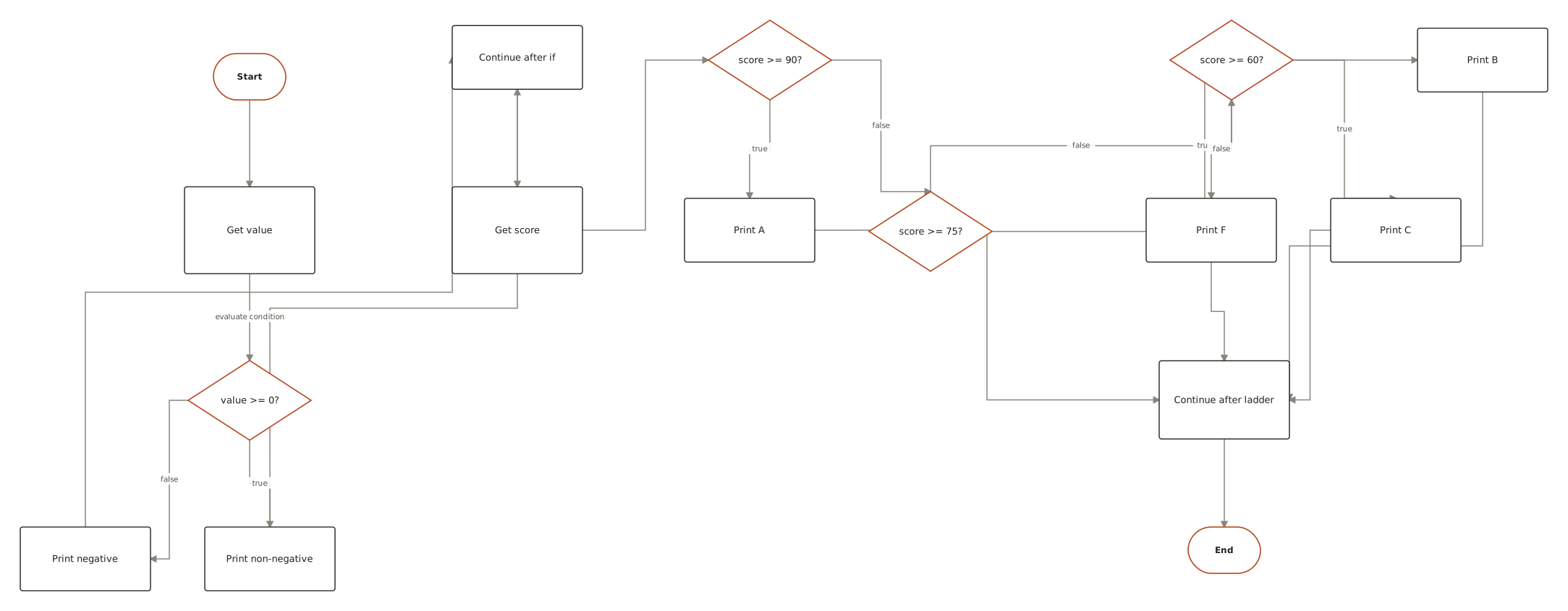
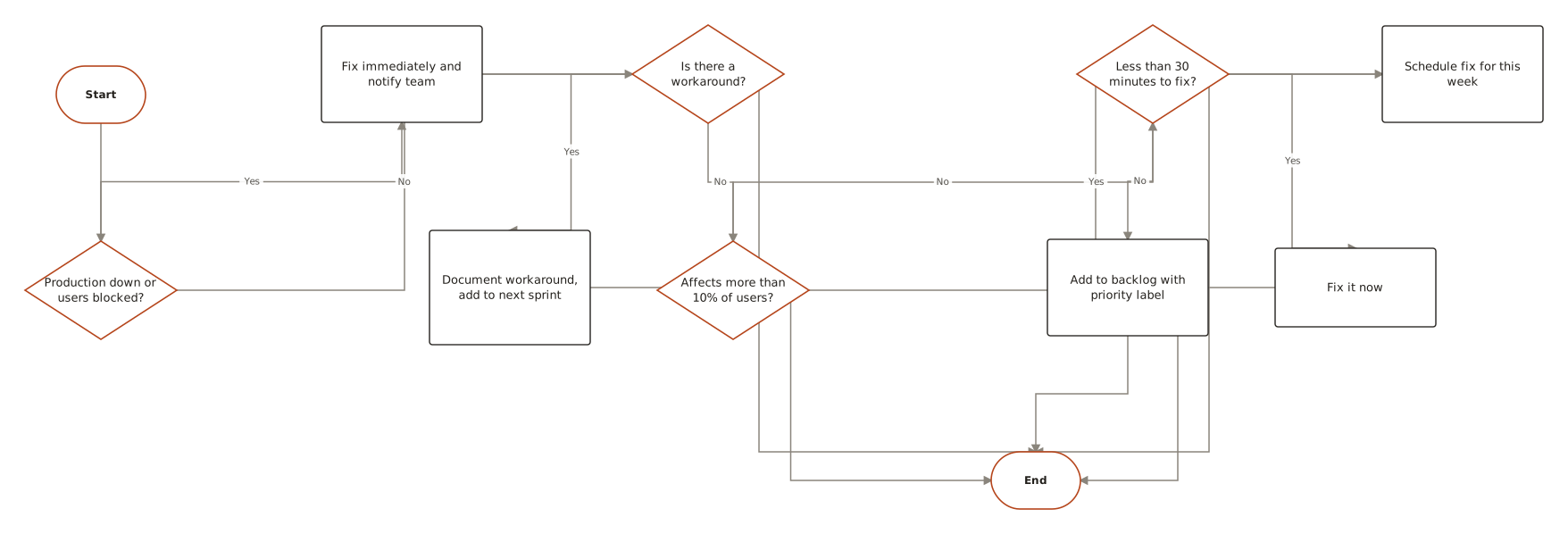
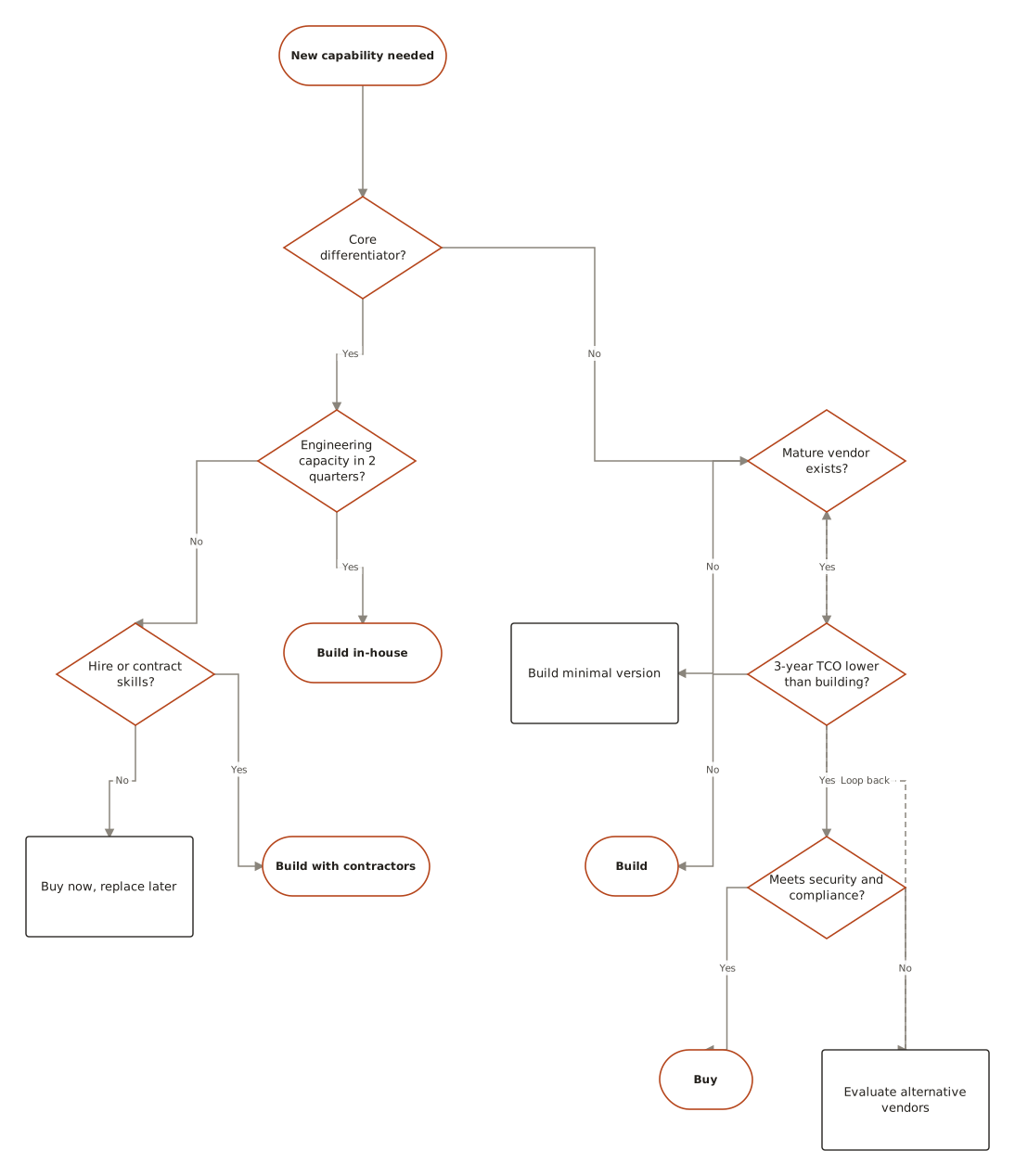
What do real flowcharts with these symbols look like?
Live diagrams from the public ChartCraft gallery, each generated from a plain-English description. Open one to see the prompt that produced it.
Questions
What does the diamond shape mean in a flowchart?
A decision. The diamond contains a question or condition, and the process continues along one of its labelled exits depending on the answer.
What flowchart shape is used for a decision?
The diamond (rhombus). In Mermaid it is written with curly braces, for example D{Valid?}.
How many branches can a decision box have?
Two or more. A yes/no question has two; a multi-answer question can have three or more, with one labelled arrow per answer.
How many arrows enter a decision symbol?
One. If several paths lead to the same question, join them with a merge point or a connector before the diamond.
Do decision branches need labels?
Yes. Label every exit with the answer it represents, such as Yes and No, so the chart can be read without guessing.
What is a nested decision in a flowchart?
A decision on one branch of another decision. The inner question is asked only when that branch is taken, like an else-if in code.
What is the difference between a decision and a process symbol?
A process (rectangle) does something and has one exit. A decision (diamond) asks something and has two or more exits.