Activity Diagram
Activity diagram generator — UML workflows from text
Describe a workflow — what happens, what branches, what runs in parallel — and ChartCraft draws the UML activity diagram with standard notation, laid out automatically.
Prose in. Diagram out.
You type
Online shopping: browse catalog, add to cart. At checkout, validate the cart. In parallel: process payment and reserve stock. If payment fails, return to checkout. Otherwise confirm the order and send the email.
ChartCraft draws
How it works
Describe it
Write what you want in plain English — no syntax to learn.
ChartCraft compiles
It parses your description, builds the structure, and runs an automatic layout.
Refine & export
Tweak with follow-up messages, then export clean SVG or PNG.
Activity diagram notation, in 30 seconds
Activity diagrams are UML's flowcharts — same idea, standard symbols, plus one thing flowcharts lack: real parallelism.
| Element | What it means |
|---|---|
| Initial node (filled dot) | Where the flow starts. |
| Action (rounded box) | One step of work, named verb-first: Validate cart, Send email. |
| Decision / merge (diamond) | A guarded branch — [paid] / [failed] — and where branches rejoin. |
| Fork / join (thick bar) | Flow splits into parallel paths and synchronizes again — the feature that separates activity diagrams from flowcharts. |
| Final node (bullseye) | The flow ends. |
| Partition (swimlane) | Optional lanes assigning actions to actors. |
Activity diagram examples
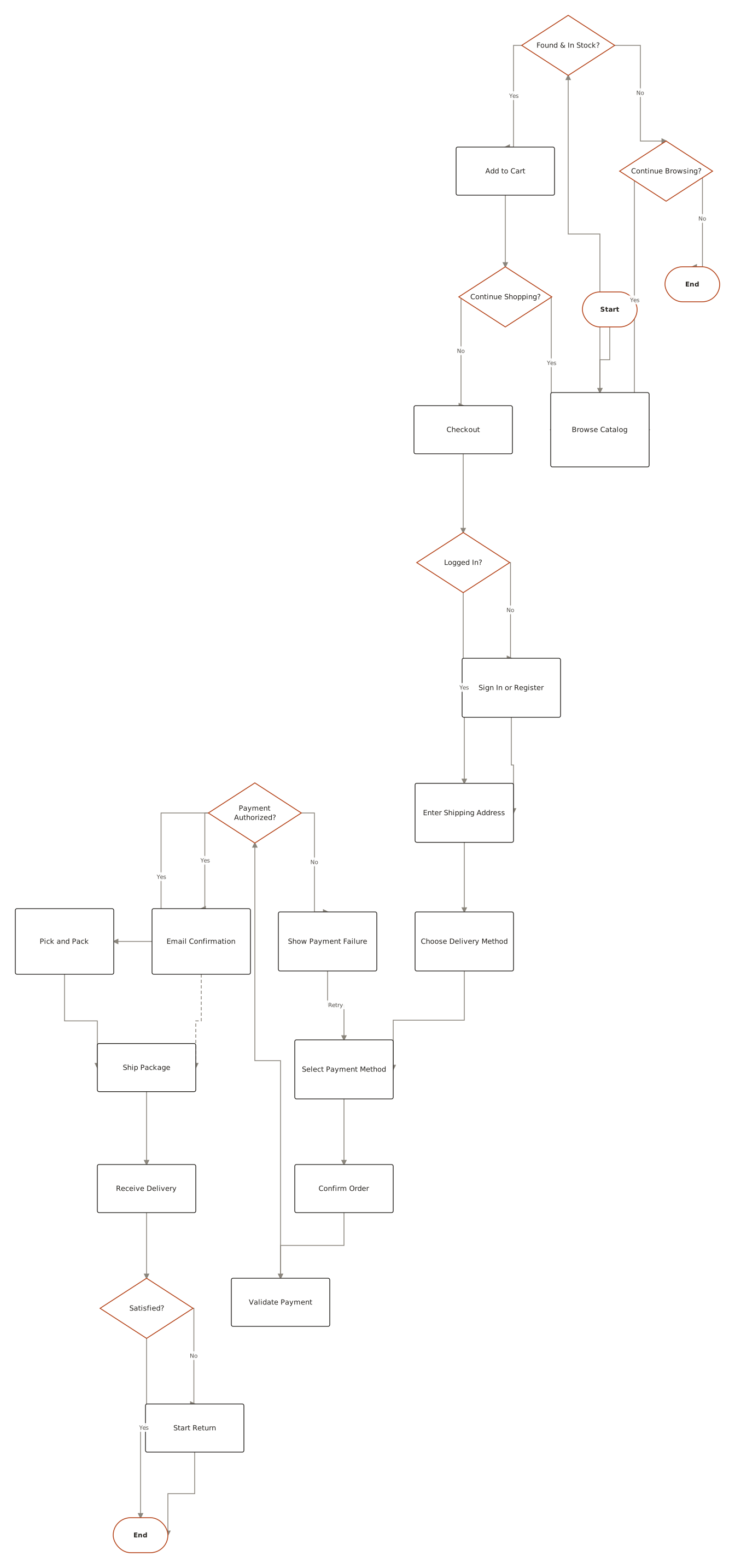
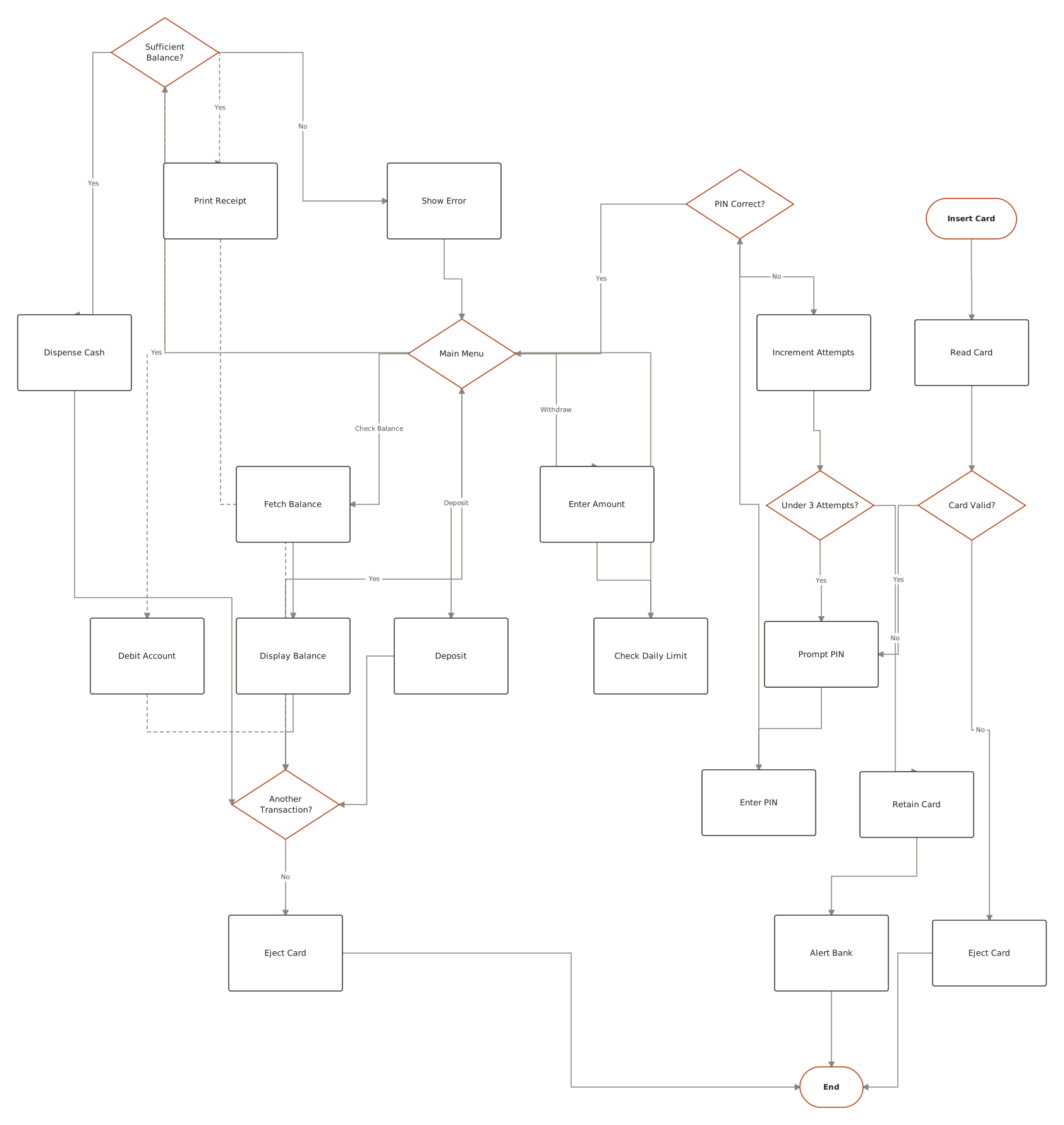
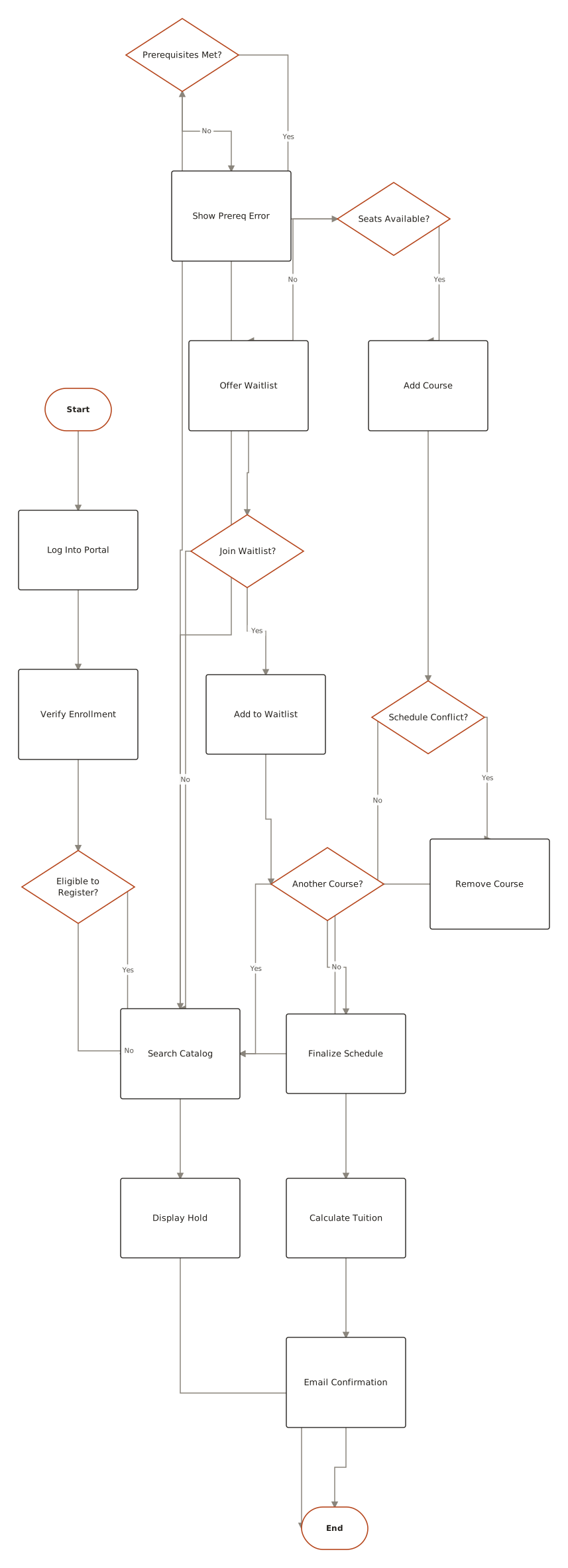
From the public examples gallery — every one produced from a plain-English description. Open one to see its prompt.
Questions
What is a UML activity diagram?
UML's notation for workflows: actions in rounded boxes, guarded decisions, and fork/join bars for work that genuinely happens in parallel. It models the flow of a process, where a state diagram models the life of one object.
What's the difference between an activity diagram and a flowchart?
They're close cousins. Activity diagrams are the UML-standardized version, and they add explicit parallelism (fork/join) and swimlane partitions. If your audience expects UML or your process has parallel work, use an activity diagram.
How do I make an activity diagram from text?
Describe the steps in order, mark the branches (“if payment fails, return to checkout”) and the parallel work (“in parallel: charge the card and reserve stock”). ChartCraft draws the actions, guards, and fork/join bars.
Can activity diagrams have swimlanes?
Yes — partitions assign each action to an actor or system. Mention who does each step and lanes are drawn; for handoff-heavy business processes, the swimlane generator focuses entirely on that view.
Can I export the diagram?
Yes, export to SVG or PNG with no watermark on any plan.