Reference
ER diagram symbols and notation, explained
An entity-relationship diagram uses a small, strict vocabulary: entities, attributes, relationships, and cardinality marks. This page defines every symbol in the two notations you'll actually meet — crow's foot and Chen — and shows how to read them.
The three building blocks
| Symbol | What it means |
|---|---|
| Entity (rectangle) | A thing you store data about: Customer, Order, Product. Becomes a table in a relational database. Named with a singular noun. |
| Attribute (listed inside, or oval in Chen) | A property of the entity: name, email, created_at. Key attributes are marked — PK for primary key, FK for foreign key. |
| Relationship (line, diamond in Chen) | How entities relate: a customer places orders. The line ends carry the cardinality symbols. |
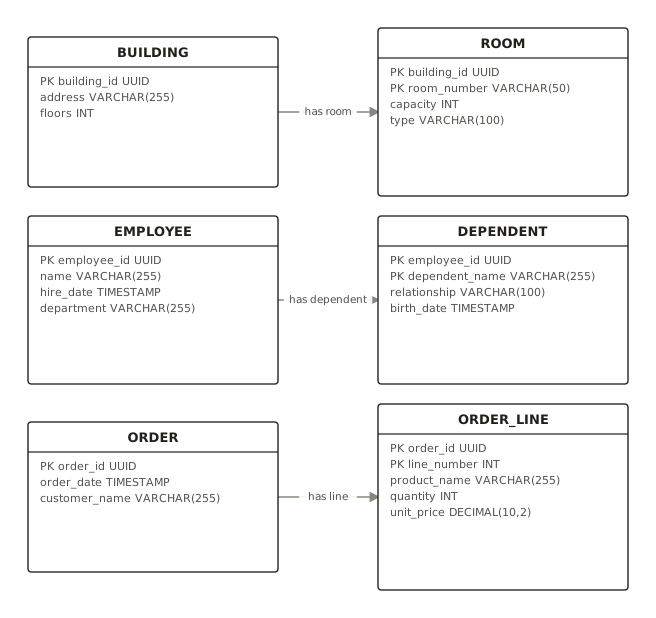
| Weak entity (double rectangle) | An entity that can't exist without its owner — an OrderLine without an Order. Its key includes the owner's key. |
Crow's foot cardinality symbols
Crow's foot notation puts two marks at each line end: the inner mark is the minimum (optionality), the outer mark — closest to the entity — is the maximum. Read them together:
| Line end | Reads as | Meaning |
|---|---|---|
| | | | One and only one | Exactly one — every order has exactly one customer. |
| ○ | | Zero or one | Optional, at most one — a person has zero or one passport. |
| | < | One or many | At least one — an order contains one or more line items. |
| ○ < | Zero or many | Optional, unbounded — a customer has zero or more orders. |
The “crow's foot” itself is the three-pronged < mark meaning “many”. A one-to-many relationship shows | | on the one side and ○< on the many side; many-to-many shows crow's feet on both ends — and in a physical schema gets resolved through a junction table.
Crow's foot vs Chen vs UML
| Notation | How it shows a one-to-many | Where you'll meet it |
|---|---|---|
| Crow's foot (IE) | Marks on the line ends: || to ○< | Database tools, ORMs, most modern ERDs — the industry default. |
| Chen | Diamond for the relationship, “1” and “N” labels, ovals for attributes | Textbooks and academia — precise but space-hungry. |
| UML class-style | Multiplicity ranges on association ends: 1 to 0..* | Software teams already using UML. |
ChartCraft draws ER diagrams in crow's foot notation — describe your entities in plain English (“a customer places many orders; each order belongs to one customer”) and the ER diagram generator chooses the right marks.
See the symbols in real diagrams
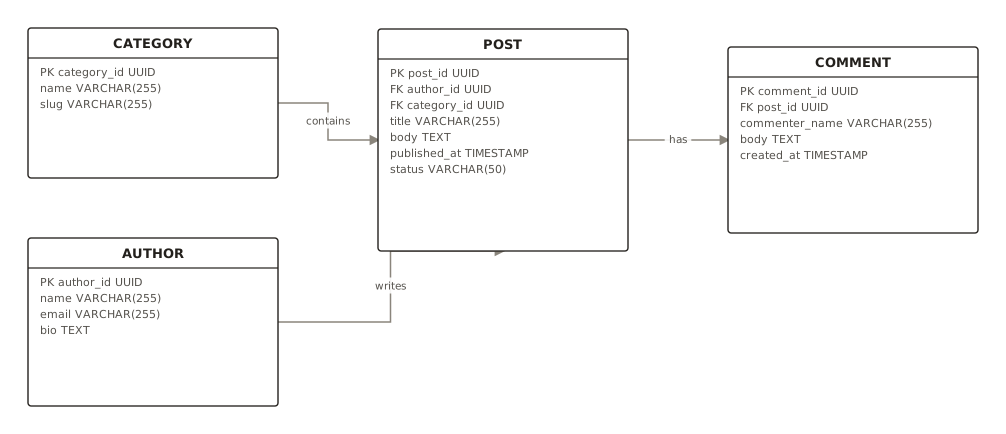
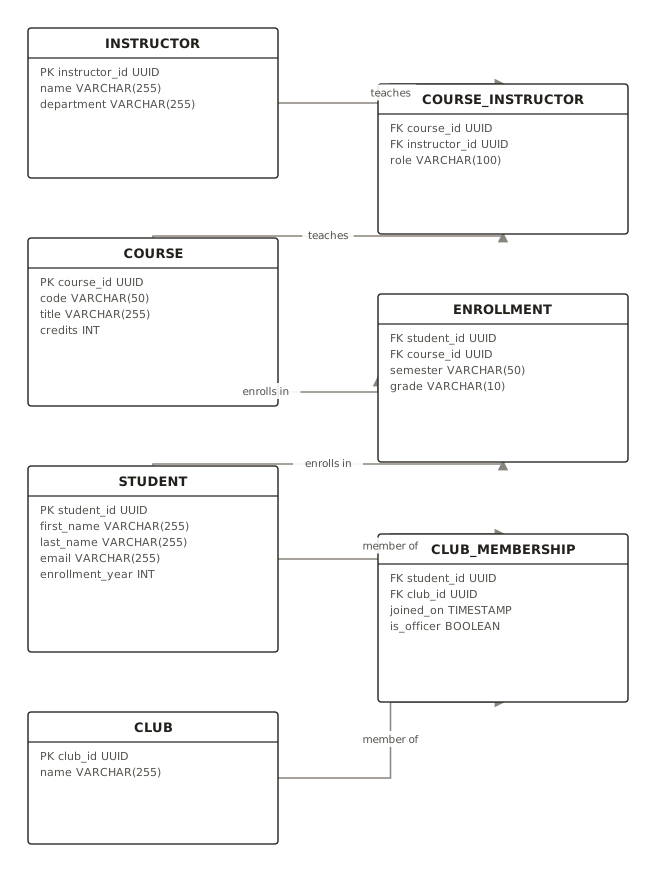
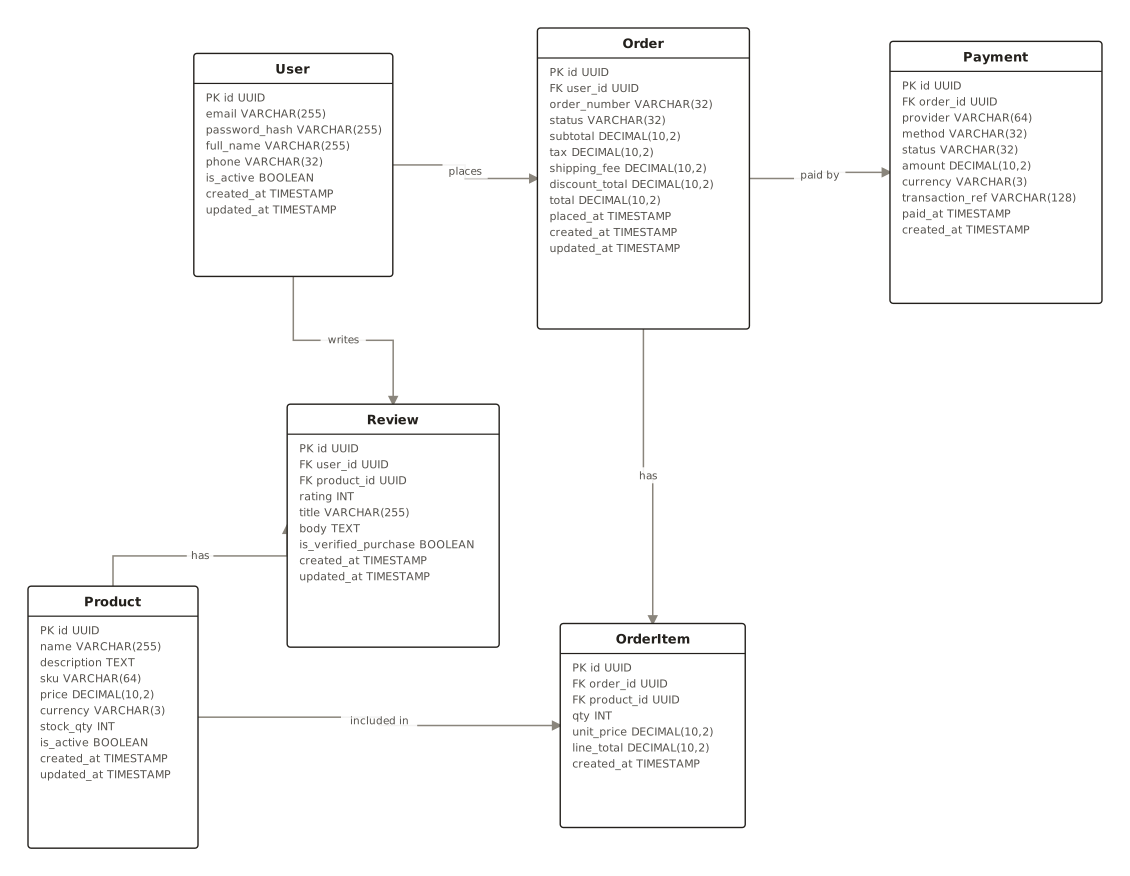
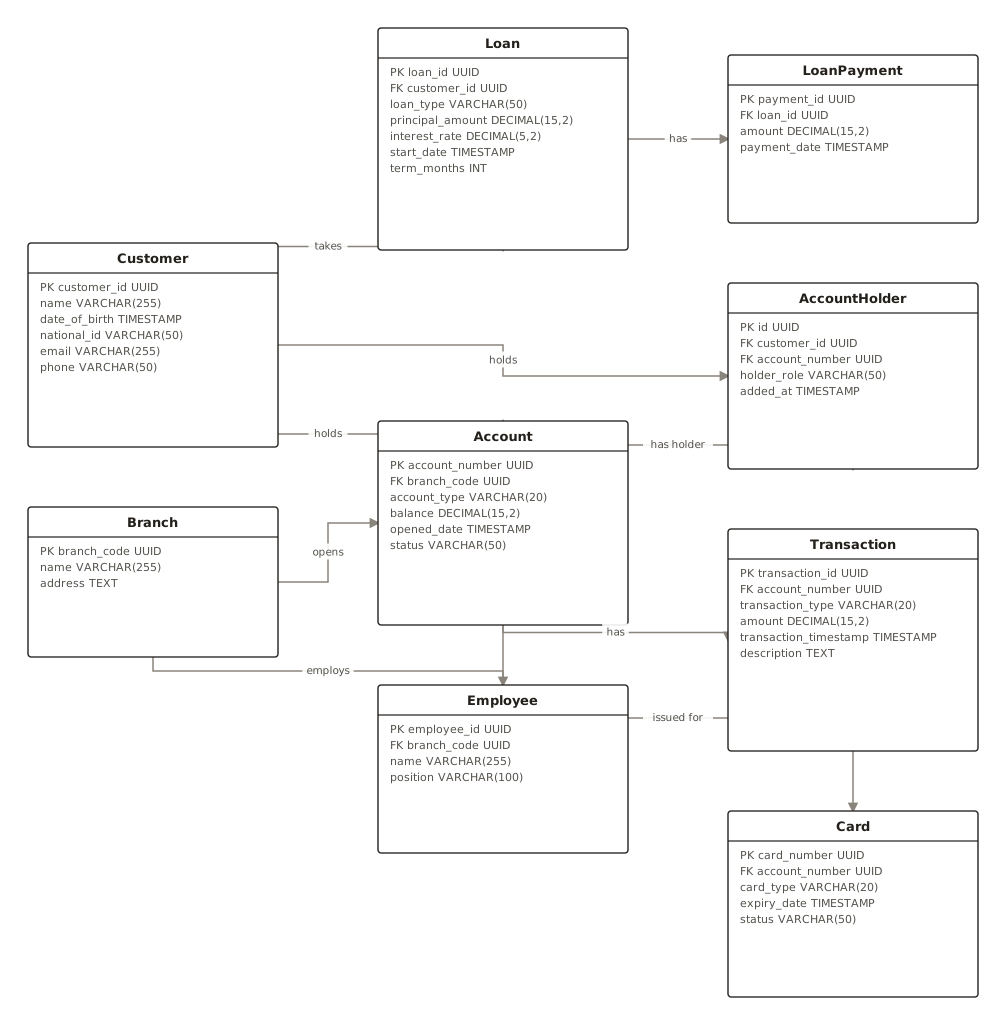
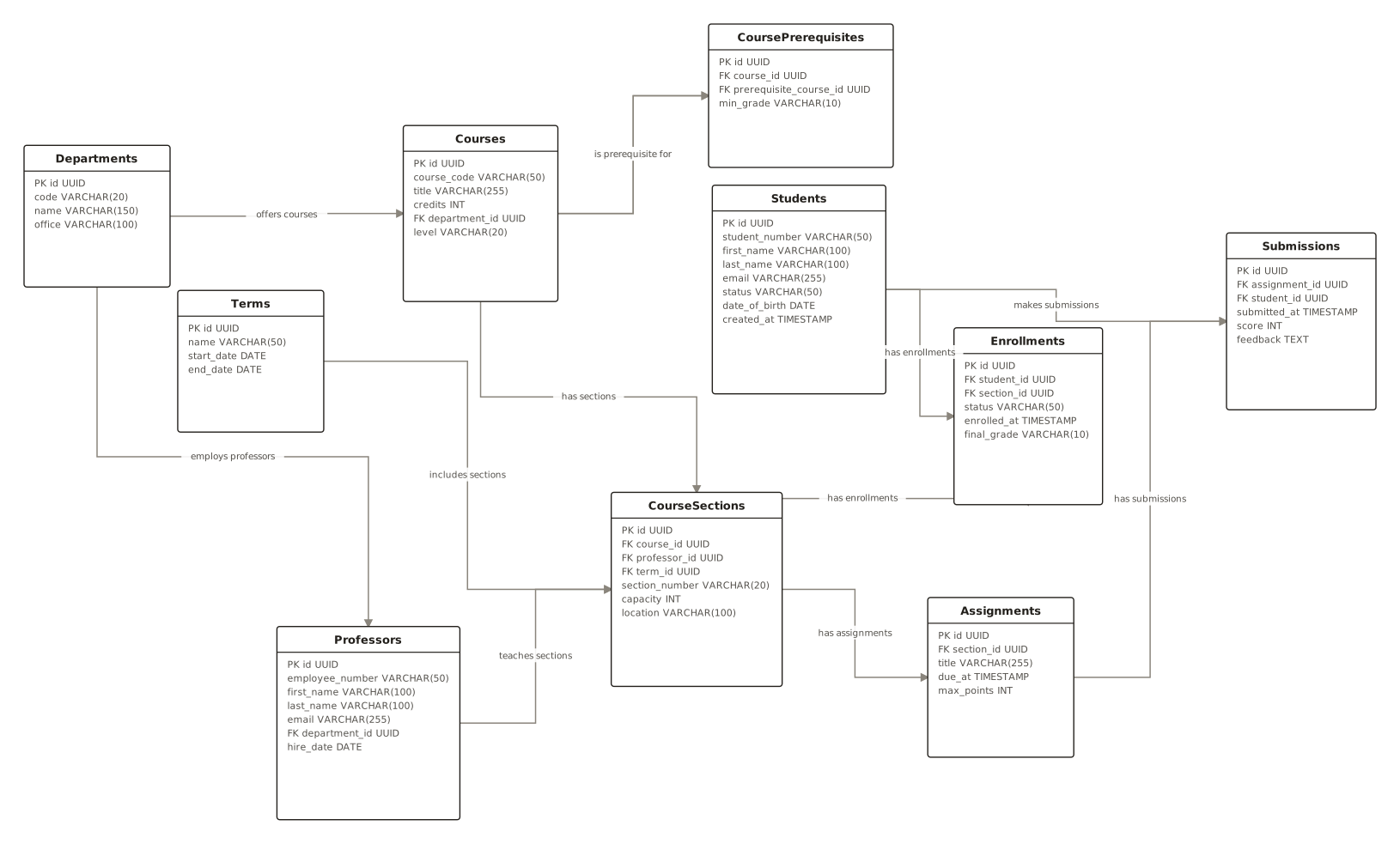
From the public examples gallery — every one produced from a plain-English description. Open one to see its prompt.
Questions
What are the symbols of an ER diagram?
Four core symbols: rectangles for entities, attribute lists (or ovals in Chen notation) for their properties, lines (or diamonds) for relationships, and cardinality marks on the line ends saying how many of each entity can participate — one, zero-or-one, one-or-many, zero-or-many.
What does the crow's foot symbol mean?
The three-pronged mark at a line end means “many”. Combined with the inner mark it reads as one-or-many (a bar plus the foot) or zero-or-many (a circle plus the foot).
How do you show one-to-many in an ER diagram?
In crow's foot: two bars (exactly one) on the parent end, a circle plus crow's foot (zero or many) on the child end. “One customer places zero or many orders; each order belongs to exactly one customer.”
What is the difference between Chen and crow's foot notation?
Chen draws relationships as named diamonds and attributes as ovals with 1/N labels — expressive, verbose, common in teaching. Crow's foot compresses everything onto the connecting line and lists attributes inside the entity box — compact, and what nearly all database tools draw.
What is a weak entity?
An entity that cannot be identified without its parent — an order line only means something inside its order. Drawn with a double border; its primary key includes the parent's key.